
First-Time Freezer Meat Buyer Guide
Buying beef or pork by the share is one of the best ways to fill your freezer with quality local meat. This guide explains how it works, how much meat to expect, how much freezer space you need, and what happens after you reserve your share.
The short version
You reserve a beef or pork share, the animal is processed by a local butcher, you choose your preferred cuts, and you pick up packaged frozen meat ready for your freezer. Instead of buying one roast or a few pounds of ground beef at a time, you receive a variety of cuts — everyday staples and larger cuts for family meals.
How the process works
Five steps from reservation to your freezer.
- 01
Choose your share
For beef, common options are quarter, half, or whole. For pork, common options are half or whole hog. A smaller share is a good fit for first-time buyers, smaller households, or limited freezer space. A larger share is better for families that cook at home often and want to stock up.
- 02
Reserve with a deposit
A deposit holds your share. The remaining balance is due closer to processing or pickup — the exact timing is listed on the beef or pork reservation page.
- 03
Processing is scheduled
The animal goes to the local processor on the scheduled date. Beef is commonly aged before cutting, so it typically takes longer. Pork is usually ready sooner.
- 04
Choose your cuts
After the animal is at the processor, you complete a cut sheet or speak with the butcher to choose steak thickness, roast size, ground beef package size, sausage options, bacon, ham, and more. First-time buyers don't need to know every cut — the butcher can walk you through standard family-friendly options.
- 05
Pick up at the butcher shop
Your meat will be packaged, labeled, frozen, and boxed at the butcher shop. You pick it up directly from the processor — we do not store or hold meat at the farm, so have your freezer cleared and ready before pickup day. Bring enough vehicle space and coolers if it’s a long drive.
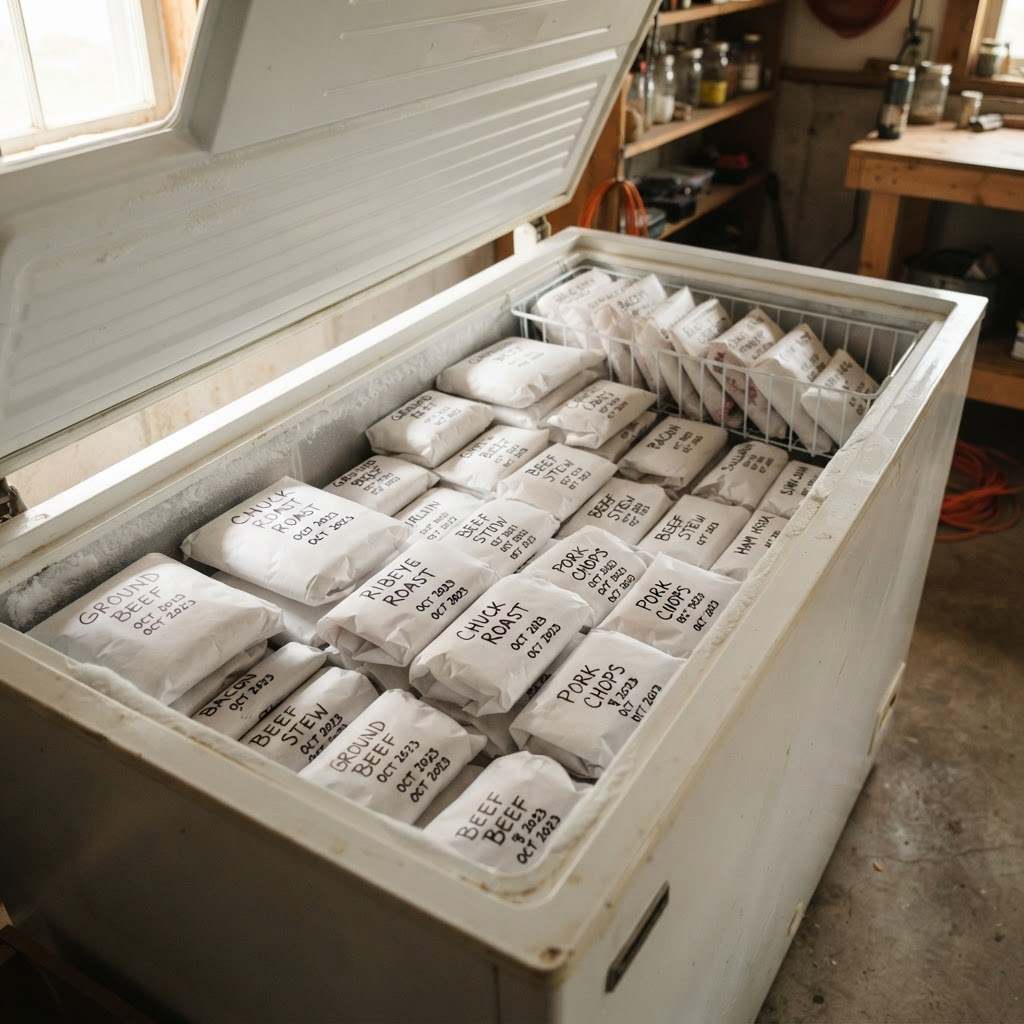
A fully stocked chest freezer — the end result of every share.
Understanding the weights
One of the most confusing parts of buying freezer meat is the difference between live weight, hanging weight, and take-home meat.
Live weight
The weight of the animal before processing. This is not the amount of meat going into your freezer.
Hanging weight
The weight after harvest, before the butcher trims and cuts the meat. Most farms and processors price by hanging weight.
Take-home weight
The packaged meat you actually bring home. Lower than hanging weight because bone, trim, moisture loss, fat, and cut choices all affect final yield.
Boneless cuts, more ground meat, trimming preferences, and specialty items can all change your final take-home amount.
How much freezer space do you need?
A simple planning rule: roughly one cubic foot for every 30–35 pounds of packaged meat.
| Share | Approx. freezer space |
|---|---|
| Quarter beef | 4–5 cu ft |
| Half beef | 8–10 cu ft |
| Whole beef | 16–20 cu ft |
| Half hog | 3–4 cu ft |
| Whole hog | 6–8 cu ft |
Estimates only. Final volume depends on package size, bone-in vs. boneless cuts, and how tightly the meat is packed.
What cuts come with your share?
Beef cuts
A beef share usually includes steaks, roasts, ground beef, stew meat, brisket, short ribs, and more. Exact variety depends on share size and cut sheet.
- Ground beef
- Ribeye steaks
- Strip steaks
- Sirloin steaks
- Filet / tenderloin
- Chuck roasts
- Arm roasts
- Rump roasts
- Brisket
- Short ribs
- Stew meat
- Soup bones
Pork cuts
A pork share usually includes chops, roasts, bacon, sausage, ribs, ham, shoulder, and ground pork. Curing options may affect cost and timing.
- Pork chops
- Bacon
- Sausage
- Ground pork
- Shoulder roasts
- Boston butt
- Picnic roast
- Spare ribs
- Ham
- Ham steaks
- Pork loin
- Tenderloin
- Hocks
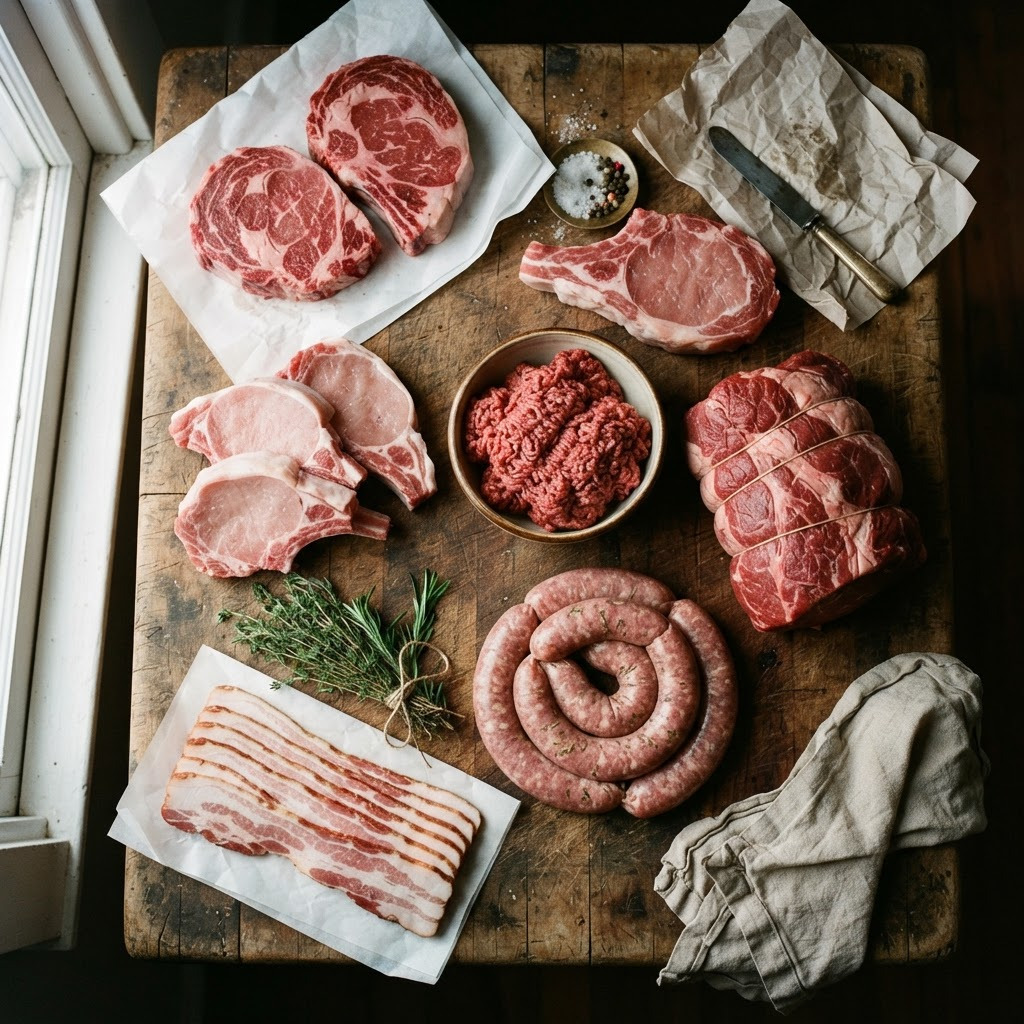
Beef and pork shares each come with a wide variety of cuts — steaks, roasts, chops, ground meat, bacon, ribs, and more.
Is buying freezer meat cheaper?
Buying by the share is not just about finding the lowest price per pound. It is about value, quality, local sourcing, and convenience. Compared with buying premium cuts one package at a time, a share can be a strong value — but it includes the whole animal, not only steaks and bacon. Your freezer will include everyday cuts like ground beef, sausage, stew meat, roasts, and bones alongside higher-demand cuts. The best fit is a household that cooks regularly and is willing to use a variety of cuts.
What first-time buyers should know
The biggest adjustment is learning to cook from the freezer instead of shopping meal-by-meal. Freezer meat works best when you plan a few meals ahead, thaw safely, and learn simple recipes for roasts, ground meat, steaks, chops, ribs, and slow-cooker cuts. A freezer full of meat can actually make weeknight meals easier ��� the main ingredient is already at home.
Safe storage and thawing
- Keep frozen meat at 0°F.
- Frozen meat kept continuously frozen remains safe, but quality is best when used within a reasonable time.
- Rotate your freezer so older packages are used first.
- Safe thawing: in the refrigerator, in cold water, or in the microwave when cooking immediately afterward.
- Do not thaw meat on the counter.
Who is freezer meat best for?
- You cook at home regularly
- You want to know where your meat comes from
- You have freezer space
- You want a variety of cuts
- You are willing to plan meals ahead
- You want to support a local farm
- You only want premium steaks or bacon
- You do not have freezer space
- You rarely cook at home
- You need exact final poundage before processing
- You are uncomfortable with natural variation between animals
Our recommendation for first-time buyers
For beef
Start with a quarter beef if you are unsure. It gives you the full freezer-meat experience without requiring as much freezer space or upfront commitment as a half or whole.
For pork
Start with a half hog if you are unsure. A good entry point that fills the freezer with variety without the commitment of a whole.
Ready to reserve?
Choose your beef or pork share, review the upcoming processing timing, and reserve your spot. If this is your first time, send us a question before reserving and we can help you choose the right amount for your household.